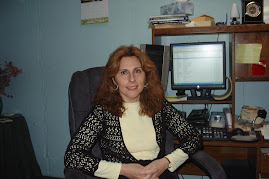
By Donna Erickson
“Let’s go tanning!” That was the summer catch phrase in the 1960’s and 70’s, when I was growing up. As tweens and teens, we baked ourselves on the beach, in search of the perfect shade of golden brown. We never thought twice about the possible outcome lurking ahead. My girl friends and I knew nothing about sun damage, skin cancer, or even sunscreen. “Pass the baby oil,” we’d shout to one another. We were shielded only by our ignorance at the time.
Had we known the potential consequences, however, would we have even cared? We had no concept of the future, growing old, or the possible dangers of our self-indulgent habits.
Yet, with all the progress made in this area, the same is true today—even with unmistakable warnings about harmful effects of the sun and UV rays. I see my nieces and others in their age group rushing out to tanning salons before prom dates and bathing suit season.
A few years ago, I hit the pivotal age of fifty. The big 5-0. I began to screen more aggressively for problems with cholesterol, blood pressure, and the like. I woke up one day with the idea of getting a full skin check. I figured, now that I was 50, I owed it to myself. I knew I had a lot of moles, but was under the impression that being olive-skinned gave me extra protection from the sun and reduced my risk for skin cancer.
I made an appointment with a dermatologist and didn’t give it a second thought. After waiting a few weeks, the day of my examination arrived. I was inspected from head to toe, literally--even in between my toes--for suspicious-looking moles. The doctor spotted a few and removed one easily with an instrument right in the office. The others would need to be removed surgically the following week.
I had to wait for the specimens to be biopsied before I could receive the results. The doctor told me not to worry, and I went on with my busy life. When the results came in, they were a bit surprising. All the moles had atypical cells, which meant they could have been or become pre-cancerous. I had a syndrome, which caused me to be prone to abnormal moles. But, one mole on my back was “borderline melanoma.” Amidst the confusion in the office, the nurse told me, on the phone, it was “in situ melanoma.” She was skimming through the report and trying to decipher it. I asked, “Do I have cancer?” Her reply was, “They got it all.”
When I saw my doctor for the follow-up appointment, the confusion was finally clarified. The mole was bordering on in situ melanoma but had not become melanoma yet. The doctor apologized for my ordeal and said she would speak with the nurse. She explained that she could send the specimen to three different labs and get three different reports! “It’s not an exact science,” she said. The doctor scheduled me for further surgery, on my back, to remove all the borders around the affected area.
I found out I had scheduled my initial appointment just in time. “If you had a waited a few more months, it would have turned into melanoma,” the doctor said. Funny, isn’t it, how our little feelings can unknowingly lead to life or death decisions? I cringe when I think about the “what if’s.” What if I had waited and not gotten checked? What if I had had no signs or symptoms to warn me? Then, the “would I’s” come to mind. Would I have had melanoma? Would I have had it advance to my lungs, brain, or other body part, as it is known to do?
In my family there happens to be a lot of cancer, but as far as I know, no skin cancer. I am now extremely cautious about being outdoors. I stopped going to the beach, I cover myself in sunscreen, and I avoid the sun whenever I have a choice. Seeing young women with their glowing tans during the winter months irks me. Even those in the health field seem oblivious to the warnings. I was receiving physical therapy for some injuries I sustained in a car accident and was surprised to see my therapist, in her twenties, greet me with a fully tanned body in April. I wanted to grab her and shake her and scream, “What the heck are you doing? You’re in the health field. Don’t you know you shouldn’t be tanning?” But I hesitated and nonchalantly mentioned my experience when it had come up in the course of conversation. “Yuh, I know. I suppose I shouldn’t,” she replied.
Young women. Tanned bodies. Some things will never change.
http://www.dermanetwork.org/news/news_details.asp?ID=550
Tuesday, June 23, 2009
THE TANNING PHENOMENUM
Labels:
dermatologist,
dermatology,
in situ melanoma,
melanoma,
skin cancer,
tanning,
UV rays
Friday, June 19, 2009
Friday, June 5, 2009
Here's a recent e-mail from a "Write Stuff" contestant.
Ms Erickson,
I have not even gotten to the point of chapters, but I can send you a few pages. I am interested in the coaching and the tips. Honestly, I know an English major who is willing to help me basically for free so you understand it is not a personal thing. I think your services are a great idea. Also if your a judge with the show, will that effect me? I am interested in your book about publishing. Let me know and I will e-mail you some of my book. I do value your opinion. I saw your You-tube submission and found it impressive. Thank you for your time.
Geremy Howard
I have not even gotten to the point of chapters, but I can send you a few pages. I am interested in the coaching and the tips. Honestly, I know an English major who is willing to help me basically for free so you understand it is not a personal thing. I think your services are a great idea. Also if your a judge with the show, will that effect me? I am interested in your book about publishing. Let me know and I will e-mail you some of my book. I do value your opinion. I saw your You-tube submission and found it impressive. Thank you for your time.
Geremy Howard
Thursday, June 4, 2009
Read This: From a LinkedIn Discussion Group
The 5 Signs That You Are Ready to Be the Go-To Expert in Your Field
Apologies for the article I posted this week as it had a faulty link…I was missing a letter at the end of the address!
So…. let's try this again! Many of you have asked for articles about how to become the go-to expert in your field, so here is one of the first to come your way!
The first article focuses on how to know if you are ready to become the go-to expert in your field in 5 simple steps. Please feel free to comment, discuss and share. http://tinyurl.com/5signsofcelebrity
Posted 23 hours ago | Reply Privately
Marsha Friedman
CEO, EMS Incorporated
See all Marsha’s discussions »
Comments (2)
I think it is important to examine how we define success. We may not be as wealthy or as prominent as political figures, but if we have earned the respect of others in our field and are sought after for advice, then we have succeeded in establishing our professional identity as a credible resource.
I have never been rich, but I am richly rewarded when a stranger remarks, "I've heard of you" or when a client takes the time to write a letter of gratitude for the services I have provided. I've kept a folder for the past two decades, which contains notes, newspaper clippings about my business, and other mementos associated with my writing or editing. More often than not, when I go through it every few years, I find news items or references to my accomplishments that I have totally forgotten about! I am humbled by others viewing me as an expert, but it's nice to earn such a reputation after all the hard work.
Donna Erickson Owner, A Flair For Writing
Senior Editor/Copartner for AG Press
Production Consultant/YouTube Judge for "The Write Stuff" reality series, CW Network
Editor, www.theauthorlist.com and "The Self-Published Author" E-zine
Staff Writer, "Poetic Monthly Magazine"
Author, "No-Hassle Publishing: An Author's Guide to Today's Changing Industry"
Posted 15 hours ago | Delete comment
Tiny Fisscher
writer of novels for children and teenagers, and non fiction about health, fitness and awareness for adults
I totally agree with Donna that we should examine how we define success. Poor Susan Boyl, who was launched into this so called 'success', and now what? And 'The four hour work week'? Good for him and clever title, but his secret is actually one word: delegate. I don't think the people who work for him have a four hour work week...
Fortunately I love my job as a writer, mustn't think of only four hours work a week. I feel very successful because of everything I achieved in my personal life ánd in my writing. Would love to have a huge international best seller though. Not to be famous, just to be able to keep on writing and never be in a situation again that I would have to do a job that I wouldn't even like to do for more than a couple of hours a week...
Tiny Fisscher, author of children- and teen books, author of non-fiction books about health, fitness and awareness for teens and adults.
Posted 8 hours ago | Reply Privately
Apologies for the article I posted this week as it had a faulty link…I was missing a letter at the end of the address!
So…. let's try this again! Many of you have asked for articles about how to become the go-to expert in your field, so here is one of the first to come your way!
The first article focuses on how to know if you are ready to become the go-to expert in your field in 5 simple steps. Please feel free to comment, discuss and share. http://tinyurl.com/5signsofcelebrity
Posted 23 hours ago | Reply Privately
Marsha Friedman
CEO, EMS Incorporated
See all Marsha’s discussions »
Comments (2)
I think it is important to examine how we define success. We may not be as wealthy or as prominent as political figures, but if we have earned the respect of others in our field and are sought after for advice, then we have succeeded in establishing our professional identity as a credible resource.
I have never been rich, but I am richly rewarded when a stranger remarks, "I've heard of you" or when a client takes the time to write a letter of gratitude for the services I have provided. I've kept a folder for the past two decades, which contains notes, newspaper clippings about my business, and other mementos associated with my writing or editing. More often than not, when I go through it every few years, I find news items or references to my accomplishments that I have totally forgotten about! I am humbled by others viewing me as an expert, but it's nice to earn such a reputation after all the hard work.
Donna Erickson Owner, A Flair For Writing
Senior Editor/Copartner for AG Press
Production Consultant/YouTube Judge for "The Write Stuff" reality series, CW Network
Editor, www.theauthorlist.com and "The Self-Published Author" E-zine
Staff Writer, "Poetic Monthly Magazine"
Author, "No-Hassle Publishing: An Author's Guide to Today's Changing Industry"
Posted 15 hours ago | Delete comment
Tiny Fisscher
writer of novels for children and teenagers, and non fiction about health, fitness and awareness for adults
I totally agree with Donna that we should examine how we define success. Poor Susan Boyl, who was launched into this so called 'success', and now what? And 'The four hour work week'? Good for him and clever title, but his secret is actually one word: delegate. I don't think the people who work for him have a four hour work week...
Fortunately I love my job as a writer, mustn't think of only four hours work a week. I feel very successful because of everything I achieved in my personal life ánd in my writing. Would love to have a huge international best seller though. Not to be famous, just to be able to keep on writing and never be in a situation again that I would have to do a job that I wouldn't even like to do for more than a couple of hours a week...
Tiny Fisscher, author of children- and teen books, author of non-fiction books about health, fitness and awareness for teens and adults.
Posted 8 hours ago | Reply Privately
Friday, May 29, 2009
ATTENTION NEW AUTHORS: HOT OFF THE “E-PRESS!”
“No-Hassle Publishing: An Author’s Guide to Today’s Changing Industry.” A must-have guide for the novice writer, which contains a wealth of information not found elsewhere. Authors will learn everything about publishing--from choosing a publisher, signing contracts, and purchasing an ISBN, to insider advice on what to avoid. Price: $19.95
For the small price of this booklet, you will save money in the long run by eliminating hours and hours of research and preventing costly mistakes. To order, e-mail donna@aflairforwriting.com.
Thursday, May 21, 2009
Care to add another comment on my articles?
Donna,
Congratulations! A new comment was recently left for your article, "Become a Better Business Writer".
You can view the comment here:
http://www.ezinearticles.com/comment.php?Become_a_Better_Business_Writer&id=2332686
Congratulations! A new comment was recently left for your article, "Become a Better Business Writer".
You can view the comment here:
http://www.ezinearticles.com/comment.php?Become_a_Better_Business_Writer&id=2332686
Wednesday, May 13, 2009
Become a Better Business Writer
By Donna Erickson
Article Word Count: 475 [View Summary] Comments (0)
Every sentence you put down on paper (or on a computer screen) identifies who you are and/or what your business offers. Poor writing, grammatical errors, and typos all deflect from the professionalism you want to generate and the image you want to create. The following tips are meant to help guide you, so your writing is clean, crisp, and clear.
1. Use the active rather than passive voice. This steadfast rule for professional writing is especially important for authors of both fiction and non-fiction. However, the advice is good for all writers creating any form of narrative, copywriting, or web content. Voice shows whether the subject performs (active) or receives (passive) the action of the verb. Instead of saying, "The film was watched by a large audience, say, "A large audience viewed the film." The use of the active voice allows for a more direct and aggressive type of writing.
2. Avoid linking verbs. Rather than saying, "She was honest and genuine" you could say, "Her proven honesty made her even more genuine." Add more power to the punch by staying away from linking verbs, such as is, was, seemed, or had. As soon as you are tempted to begin a sentence with there is, it was, or he had (for example), try coming up with a new approach, such as the one above.
3. Try not to use the word very. In most cases, the sentence will sound better without it. Most likely, you'll notice if you decide to remove it, you won't miss it.
4. Limit the word that. Its overuse in today's writing is abundant. Example: see the last sentence, in number three above. I could have chosen to write: most likely, you'll notice that if you decide to remove it, you won't miss it. You can see the word is not necessary. By the way, I just created another sentence without that (in the previous sentence).
5. Write to the reader. If you are writing to sell, be sure to use the word you more than the word I or we. You want the reader to identify with what you are saying.
6. Stay away from cliches and colloquialisms. Experts recommend limiting the use of them. Occasional use is okay, but I have seen writers who tend to write every sentence that way. Some examples to avoid include: chill out, pissed off, as fate would have it, on top of the world, bored to death, etc.
7. Keep sentences short. Rather than writing a long, run-on sentence of connected phrases, chop it up. Cut it into several short sentences or use the em dash (see below), and you'll see the readability will improve.
If you follow these rules, your writing should improve dramatically. You may even get more business - *because you will be keeping the reader's attention instead of losing a sale.
*( use of em dash)
Donna Erickson
"Your Publishing Guru"
Owner, A Flair For Writing
http://www.aflairforwriting.com
Article Source: http://EzineArticles.com/?expert=Donna_Erickson
Article Word Count: 475 [View Summary] Comments (0)
Every sentence you put down on paper (or on a computer screen) identifies who you are and/or what your business offers. Poor writing, grammatical errors, and typos all deflect from the professionalism you want to generate and the image you want to create. The following tips are meant to help guide you, so your writing is clean, crisp, and clear.
1. Use the active rather than passive voice. This steadfast rule for professional writing is especially important for authors of both fiction and non-fiction. However, the advice is good for all writers creating any form of narrative, copywriting, or web content. Voice shows whether the subject performs (active) or receives (passive) the action of the verb. Instead of saying, "The film was watched by a large audience, say, "A large audience viewed the film." The use of the active voice allows for a more direct and aggressive type of writing.
2. Avoid linking verbs. Rather than saying, "She was honest and genuine" you could say, "Her proven honesty made her even more genuine." Add more power to the punch by staying away from linking verbs, such as is, was, seemed, or had. As soon as you are tempted to begin a sentence with there is, it was, or he had (for example), try coming up with a new approach, such as the one above.
3. Try not to use the word very. In most cases, the sentence will sound better without it. Most likely, you'll notice if you decide to remove it, you won't miss it.
4. Limit the word that. Its overuse in today's writing is abundant. Example: see the last sentence, in number three above. I could have chosen to write: most likely, you'll notice that if you decide to remove it, you won't miss it. You can see the word is not necessary. By the way, I just created another sentence without that (in the previous sentence).
5. Write to the reader. If you are writing to sell, be sure to use the word you more than the word I or we. You want the reader to identify with what you are saying.
6. Stay away from cliches and colloquialisms. Experts recommend limiting the use of them. Occasional use is okay, but I have seen writers who tend to write every sentence that way. Some examples to avoid include: chill out, pissed off, as fate would have it, on top of the world, bored to death, etc.
7. Keep sentences short. Rather than writing a long, run-on sentence of connected phrases, chop it up. Cut it into several short sentences or use the em dash (see below), and you'll see the readability will improve.
If you follow these rules, your writing should improve dramatically. You may even get more business - *because you will be keeping the reader's attention instead of losing a sale.
*( use of em dash)
Donna Erickson
"Your Publishing Guru"
Owner, A Flair For Writing
http://www.aflairforwriting.com
Article Source: http://EzineArticles.com/?expert=Donna_Erickson
Labels:
a flair for writing,
author,
editing,
publishing,
writer
Subscribe to:
Posts (Atom)